







Nephrotic Syndrome
Introduction and Facts
Nephrotic syndrome (NS) in children is the most common kidney disease in children. The incidence of NS in children in the literature in the United States and England is 2-7 new cases per 100,000 children per year, with a prevalence ranging from 12-16 cases per 100,000 children. In developing countries the incidence is higher. In Indonesia reported 6 per 100,000 per year in children aged less than 14 years. The ratio of boys and girls is 2:1.
Pathophysiology
The etiology of NS is divided into 3, namely congenital, primary/idiopathic, and secondary following systemic diseases, including systemic lupus erythematosus (SLE), Henoch Schonlein purpura, and others. In children, most (80%) of idiopathic NS have minimal anatomic pathology (SNKM) features. Other anatomical pathology features are focal segmental glomerulosclerosis (GSFS) 7-8%, diffuse mesangial proliferative (MPD) 2-5%, membranoproliferative glomerulonephritis (GNMP) 4-6%, and membranous nephropathy (GNM) 1.5%.
Clinical Symptoms and Complications
NS patients usually present with palpebral or pretibial edema. If more severe will be accompanied by ascites, pleural effusion, and edema of the genitalia. Sometimes accompanied by oliguria and symptoms of infection, decreased appetite, and diarrhea. If accompanied by abdominal pain, be careful of the possibility of peritonitis or hypovolemia. Sometimes accompanied by microscopic hematuria.
Diagnosis
Nephrotic syndrome (SN) is a clinical condition characterized by the following symptoms:
1. Massive proteinuria (> 40 mg/m2 LPB/hour or 50 mg/kg/day or urine protein/creatinine ratio when > 2 mg/mg or dipstick = 2+)
2. Hypoalbuminemia < 2.5 g/dL
3. Edema
4. May be accompanied by hypercholesterolemia > 200 mg/dL
Supportive examinations, including:
1. Urinalysis. Urine culture is only performed when clinical symptoms suggest a urinary tract infection.
2. Quantitative urine protein, can use 24-hour urine or protein/creatinine ratio in the first morning urine
3. Blood test
1 Complete peripheral blood (hemoglobin, leukocytes, leukocyte count, platelets, hematocrit, ESR)
2 Albumin and serum cholesterol
3 Urea, creatinine and creatinine clearance by classical method or by Schwartz formula
4 Levels of complement C3; if systemic lupus erythematosus is suspected, the examination is added with complement C4, ANA (anti nuclear antibody), and anti ds-DNA
Management and Care
Children with clinical manifestations of NS for the first time should be hospitalized with the aim of accelerating the examination and evaluation of diet management, management of edema, initiation of steroid treatment, and parental education.
Before starting steroid treatment, the following checks are performed:
1. Measurement of weight and height
2. Blood pressure measurement
3. Physical examination to look for signs or symptoms of systemic disease, such as systemic lupus erythematosus, Henoch-Schonlein purpura.
4. Look for the focus of infection in the teeth, ears, or worms. Any infection needs to be eradicated before steroid therapy is started.
5. Perform the Mantoux test. If the result is positive, INH prophylaxis is given for 6 months along with steroids, and if tuberculosis is found, antituberculosis drugs (OAT) are given.
Hospitalization in relapsed NS is only carried out if there is severe anasarca edema or accompanied by complications of vomiting, severe infection, renal failure, or shock. Bed rest does not need to be forced and physical activity is adjusted to the patient's ability. If the edema is not severe, the child can go to school.
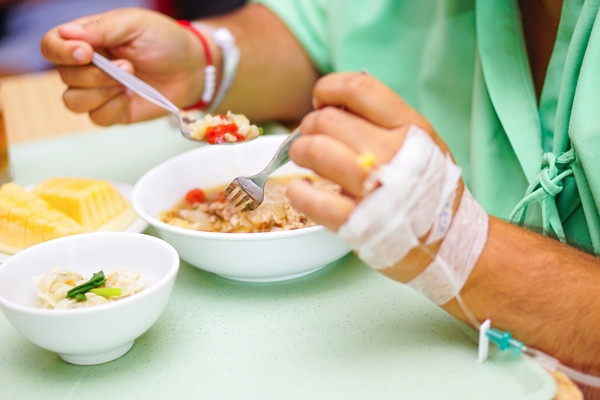
Dietetic. Administration of a high-protein diet is considered contraindicated because it will increase the burden on the glomerulus to excrete the waste of protein metabolism (hyperfiltration) and cause glomerular sclerosis. If given a low protein diet, protein energy malnutrition (MEP) will occur and cause child growth inhibition. So it is enough to give a normal protein diet in accordance with the RDA (recommended daily allowances) which is 1.5-2 g / kg / day. A low-salt diet (1-2 g/day) is only necessary as long as the child has edema.
Diuretic. Fluid restriction is recommended as long as there is severe edema. Usually given loop diuretics such as furosemide 1-3 mg / kg / day, if necessary combined with spironolactone (aldosterone antagonists, potassium-sparing diuretics) 2-4 mg / kg / day. Before administering diuretics, it is necessary to rule out the possibility of hypovolemia. In the use of diuretics for more than 1-2 weeks, it is necessary to monitor the electrolytes of potassium and sodium in the blood.
Immunization. NS patients who are receiving corticosteroid treatment >2 mg/kg/day or a total of >20 mg/day, for more than 14 days, are immunocompromised patients. dead, such as IPV (inactivated polio vaccine). After stopping prednisone for 6 weeks, live virus vaccines can be given, such as oral polio, measles, MMR, varicella. All children with NS are strongly recommended to be immunized against pneumococcal and varicella infections.
Treatment with corticosteroids
In idiopathic NS, corticosteroids are the initial treatment, unless contraindicated. The type of steroid given is prednisone or prednisolone.
a. Initial therapy
Initial therapy in children with idiopathic nephrotic syndrome without steroid contraindications as recommended by the ISKDC is prednisone 60 mg/m2 LPB/day or 2 mg/kg/day (maximum 80 mg/day) in divided doses, to induce remission. The prednisone dose was calculated according to ideal body weight (weight to height). The initial full dose of prednisone is given for 4 weeks. If there is a remission in the first 4 weeks, followed by the second 4 weeks with a dose of 40 mg/m2 LPB (2/3 initial dose) or 1.5 mg/kg body weight/day, alternately (everyday), once a day after breakfast. . If after 4 weeks of full-dose steroid treatment, no remission occurred, the patient was declared steroid resistant (Figure 2).
b. Treatment of SN Relapse
Full dose of prednisone was given until remission (maximum 4 weeks) followed by alternating doses for 4 weeks. In patients with NS in remission who experience proteinuria again = ++ but without edema, before giving prednisone, the trigger is sought first, usually upper respiratory tract infection. If there is an infection given antibiotics for 5-7 days, and if then the proteinuria disappears, there is no need for relapse treatment. If early found proteinuria = ++ accompanied by edema, then the diagnosis of relapse can be established, and prednisone is started.
c. Treatment of SN Repals Frequent or Steroid Dependent. There are 4 treatment options for frequent or steroid-dependent NS relapse:
1. Long-term administration of steroids
2. Administration of levamisole
3. Treatment with cytostatic
4. Treatment with cyclosporine, or mycophenolate mofetil (last option)
In addition, it is necessary to look for foci of infection such as tuberculosis, infection in the teeth, inflammation of the middle ear, or worms.
Reference:
Unit Kerja Koordinasi Nefrologi Ikatan Dokter Anak Indonesia. Konsesnsus tatalaksana sindroma nefrotik idiopatik pada anak. 2nd Ed. Cetakan kedua. [Internet]. 2012 [Cited 29/8/2021]. Available from: https://spesialis1.ika.fk.unair.ac.id/wp-content/uploads/2017/03/Konsensus-Tata-Laksana-Sindrom-Nefrotik-Idiopatik-Pada-Anak.pdf